Showing posts with label Shawn H.. Show all posts

Thursday, February 28, 2013

Nordgold opens Bissa mine in Burkina Faso

BISSA, BURKINA FASO — Just 15 months after starting construction, Nordgold (NORD-L) has entered production at its Bissa open-pit gold mine in Burkina Faso, located in the rural commune of Sabce, 100 km north of the capital Ouagadougou.
The mid-tier Russian gold miner had an opening ceremony at Bissa in mid-January, attended by Nordgold executives and officials from the Burkinabé government, including Prime Minister Luc-Adolphe Tiao.
Nordgold expects the US$250-million mine to produce 100,000 oz. gold this year and ramp-up to 150,000 to 200,000 oz. gold annually when it reaches peak annual production of 4 million tonnes over the next few years. Mine life is set at a minimum 10 years.
The mine is comprised of five open pits spread over 5.5 km of the northeast-trending mineralized zone, near a national highway. The majority of the Bissa ore is weathered saprolite under a layer of laterite, all of which is relatively easy to mine and process.
The 12,000-tonne-per-day mill uses crushing, semi-autogenous grinding and ball milling and conventional carbon-in-leach recovery. The total workforce is 590 people.
The mine has been built according to the most advanced engin­eering and safety standards, Nordgold’s CEO Nikolai Zelensky said at the ceremony. “Bissa will be one of our largest production facilities, and a vital part of Nordgold’s international expansion strategy.”
Nordgold chairman Philip Baum echoed that sentiment, saying that Bissa’s first gold is “an important milestone for us . . . it clearly demonstrates our team’s ability to develop these significant projects.”
According to an April 24, 2012, press release, as of January 2012, proven and probable reserves at Bissa were 29 million tonnes grading 1.83 grams gold per tonne, for 1.7 million contained oz. gold. A further 75.8 million tonnes at 1.23 grams gold stood in the measured-and-indicated resource category for 3 million contained oz. gold, while another 63.3 million tonnes at 0.95 gram gold were classified as inferred, for 1.9 million contained oz. gold. That’s a hefty 6.6 million contained oz. gold in total.


High level Microsoft executive to visit Ghana


The world’s largest software and programme developer, the Microsoft Corporation, has confirmed its Senior Vice President in charge of Corporate Business, Ali Famamwy, will pay a day’s working visit to Ghana on March 4, 2013.

Mr Famamwy’s visit will be at the invitation of rlg Communications Limited, the pioneer ICT devices assembler in Africa based in Ghana.

While in the country, Mr Famamwy will be the Guest of Honour at the official Sod Cutting Ceremony for the multi-million dollar ICT Park to be known as the Hope City in Accra next month.

He will also pay courtesy call on President John Mahama at the Flagstaff House.

The Hope City Project is an integrated village with facilities for housing, ICT, recreation, business and much more and is expected to create jobs for about 50,000 people, directly and indirectly.

In August last year, Microsoft and rlg signed an agreement which allows rlg phones and computers to run on Microsoft Windows.

The influential business magazine Forbes described the rlg-Microsoft deal as a “partnership of the future.”

The deal also granted rlg Original Equipment Manufacturing (OEM) status, making it one of the few such organizations in Africa.
“This visit by a very senior official of Microsoft excites us because it reaffirms the growing trust and confidence the international community is reposing in us,” said Roland Agambire, Founder & Chief Executive of rlg Communications Ltd.

Liberia Vows to End Violence Against Women


DAKAR — In the lead up to Women’s Day, on March 8, Liberia has become the latest nation to sign a pledge to end violence against women and girls. In Dakar, the human-rights group U.N. Women says nearly 100 countries have no specific legal provisions against domestic violence.

A 45-year-old housewife from Monrovia, Lucy Morris, says violence against women is a serious problem in Liberia.

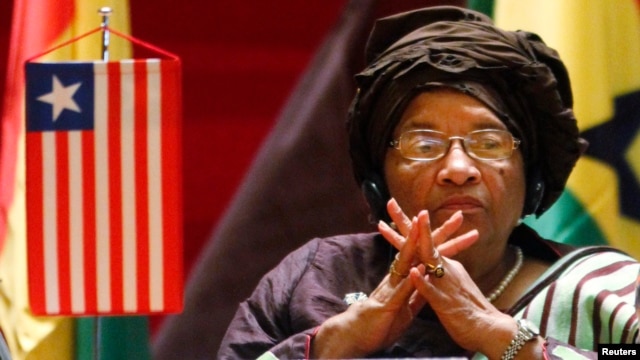
Liberia's President Ellen Johnson Sirleaf attends a West African regional bloc ECOWAS summit on the crisis in Mali and Guinea Bissau, at Fondation Felix Houphouet Boigny in Yamoussoukro, February 27, 2013. “Many of us are beaten by our husbands.  My husband beats me almost every time.  He hurts me a lot.  I have taken the complaints to the female [rights] lawyer and they have called him for an investigation, but this is still happening," she said.

Morris is not alone.

The latest data from the World Health Organization (WHO) show 33 percent of married women in Liberia have reported experiencing domestic violence.  Up to 77 percent of Liberian women say they have been the victim of sexual violence.

Human rights groups say it is likely these numbers are even higher, as many of the cases go unreported.

Liberian Ministry of Gender and Development spokesperson Smith Toby says Liberia has laws in place against both domestic violence and rape, but many cases are never prosecuted.

Guinea-Bissau, Guinea and Sierra Leone: Tired of war

THE HEADLIGHTS OF the bus pick out the wet figure of a soldier with a gun over his shoulder standing among droopy bushes at the first checkpoint after the border. He hurries out of the rain into the warm bus and almost as an afterthought announces he will escort it on the short journey through his country. “We will make a stop,” he says, “but nobody can get off.”
A few days earlier a group of military officers had seized power in Guinea-Bissau. This was nothing unusual: the tiny country of 1.5m has seen five coups in the past decade. No president has served a full term since independence from Portugal in 1974. But this rarely poses a problem for buses from Senegal to Guinea, the country’s bigger neighbours, and then on to Sierra Leone and Liberia. The only change to the schedule today is that at the regular stop in the capital, Bissau, passengers may get on but not off.
Special report
The soldier wrings out his cap and says he is sorry for the inconvenience: “You know how it is.” The locals nod, then start to harangue him. One shouts, “It’s your fault it’s raining.” The passengers laugh. They blame the unruly armed forces for the lack of development. The occasional killings are bad enough, says the driver, but the corruption is even worse.
Political violence has undermined state institutions, kept away foreign investment, crippled health care and education and increased inequality. Guinea-Bissau fits the picture of an African state rendered dysfunctional by violent disorder.
Yet that picture has become less common. Several big conflicts across the continent have died down. In the past decade or so Angolans stopped fighting after half a million people died and Chad lapsed into peace after four civil wars. In Ethiopia and Mozambique wars ended a decade earlier. Violence is broadly in decline, even if it does not always feel that way.
The Small Arms Survey, a Swiss research project, says that measured by the number of violent deaths per person (including in wars) only two African countries rank among the world’s leading ten, South Africa and Lesotho—though there may be some under-reporting. The number of armed conflicts in Africa has steadily declined from at least 30 at the end of the cold war to little more than a dozen today; the number of successful coups fell by two-thirds in the same period. In 2000 Robert Kaplan, an American commentator, predicted in a book called “The Coming Anarchy” that places like Africa would sink ever deeper into a violent morass. He was wrong.
Three major conflicts (defined by the Nordic Africa Institute in Uppsala, Sweden, as those with more than 1,000 deaths a year) continue, but even they may be getting closer to a peaceful resolution. Sudan is slowly sorting itself out after the south’s secession in 2011. Congo’s east remains violent, but elsewhere the country’s main concern is poverty not war. In Somalia a coalition of international forces has brought peace to the capital, Mogadishu, for the first time in many years: building sites now outnumber bomb sites. Admittedly a new cluster of conflicts has sprung up around the Sahara. Islamic extremists are defying governments in Mali and elsewhere, but regional and Western powers are belatedly fighting back.

Sunday, February 17, 2013

Ghana government cuts fuel subsidies, prices jump


Ghana cut fuel subsidies on Sunday as its new government took measures to curb spending after the West African exporter of cocoa, gold and oil overshot its budget deficit target by almost 100 percent last year.
The National Petroleum Authority (NPA) said in a statement that fuel price hikes were necessary to cover the cost of an increase in crude oil prices and the depreciation of the local cedi currency by about 14 percent last year.
The new prices, which took effect on Sunday, saw premium petrol and diesel prices jump 20 percent per litre in cedi terms, while Liquefied Petroleum Gas (LPG) rose 50 percent.
Prices of kerosene, marine diesel and residual fuel oil also increased 15 percent per litre.
The decision to cut subsidies came days after Fitch rating agency revised the nation's outlook to negative from stable, citing the severe deterioration of its fiscal deficit.
"The government has funded the budget deficit mainly through borrowing at high interest rates on the domestic market, at 22.8 percent for 91-day T-bills," the agency said on Friday.
"While current expenditure has surged, the share of capital expenditure has fallen, which could harm longer-term growth prospects and worsen debt dynamics," Fitch said.
Decisions by governments in the region to cut fuel subsidies have previously led to social unrest. Nigeria's government was forced last year to reinstate some subsidies it had cut after several days of strikes and protests, while Ghana's last attempt to cut subsidies more than two years ago resulted in opposition-led street protests.

Liberia: Armed Forces to Deploy to Mali in March


A platoon of the Armed Forces of Liberia, expected to take up a military assignment to war-torn Mali, is currently undergoing pre-deployment training at Camp Ware Military Barracks, Careysburg, Montserrado County, Defense Minister Brownie Samukai, has disclosed.
The move is seen as an indication that the country is now ready to send its restructured army on a peacekeeping mission abroad.
Minister Samukai made the disclosure in Monrovia Thursday at the Ministry of Information regular press briefing. He also addressed a wide range of issues including AFL deployment to Mali, a pending recruitment exercise to beef up the strength of the army amidst reports of a high level of attrition within the military, including preparation for the renovation of the Camp Todee Military Barracks.
In January of this year, President Ellen Johnson Sirleaf sent a proposal to the National Legislature for that body's approval in the AFL participation in Mali's peacekeeping operations, where the French and Mali soldiers are fighting to dislodge Al-Qaeda backed Islamist militants who have been fighting to remove the country's legitimate authority.

Guinea military chief dies in Liberia plane crash


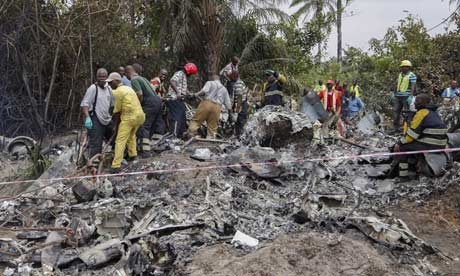
The head of Guinea's armed forces was killed on Monday when the aircraft carrying him and five other senior military officials crashed close to the Liberian capital, Monrovia.
General Souleymane Kelefa Diallo, a staunch ally of Guinea's president, Alpha Conde, was on a security mission to Liberia. All six officials and five crew on board died. Liberia's defence minister, Brownie Samukai said the cause of the crash was not immediately clear.
Guinea plane crash in LiberiaLiberia's president, Ellen Johnson-Sirleaf, who visited the crash site in the company of Guinea's ambassador, declared a national day of mourning.
Diallo was one of the main architects of the reform of Guinea's military, which seized power in 2008. About 4,000 soldiers were forced to retire under a UN-backed scheme to slim the armed forces.
Conde's government has been trying to organise elections for May, the final step in the transition back to civilian rule and a prerequisite to unlock millions of dollars of frozen foreign aid. The opposition, alleging bias in the electoral authority, has called protests for Wednesday.

Will ignoring West Africa’s drug hub curse world with another Somalia?


UNITED NATIONS — It should come as no surprise that a country haunted by the aftermath of civil war, challenged by military coups, mired in corruption, and facing the undertow of poverty would be a prime candidate for drug smuggling.
Add a geographic location on the nexus of transportation routes, but off the media’s political radar, and you have a near-perfect combination for what has become a narcotics trans-shipment point.
The country is Guinea-Bissau, a sliver of land and some forgotten islands on the shoulder of West Africa but astride key transportation routes between South America and Europe.

Soldiers in the Guinea-Bissau capital, Bissau, on Oct. 21.  /AFP/Getty ImagesA former Portuguese colony which gained independence in 1974 under a left wing political movement, Guinea-Bissau has faced a tumultuous history of one party rule, mismanagement, and corruption.
Civil war in the 1990’s and an endemic climate of military takeovers, the most recent being in April 2012, saw the small land of 1.6 million people morph into what many security experts say is a cocaine trans-shipment hub.
The UN Security Council has expressed alarm that drug trafficking has expanded since the recent coup. There are widespread allegations that key members of the Guinea-Bissau military serve as both protectors to and often as “kingpins” of narcotics trafficking.

Gambia’s four-day work week: Maybe it’s not so crazy


Gambian President Yahya Jammeh, more often in the news for human rights violations than progressive labour practices, has cut the work week for public officials to just four days. This is not just his usual brand of crazy, says SIMON ALLISON, who thinks the president might just be onto something (shh, don’t tell our unions).
It’s not often that we get to say this, so here goes: it’s a good time to be a Gambian civil servant. Thanks to a new decree from eccentric President Yahya Jammeh, public officials in this tiny West African state will work for just four days a week, allowing them “to devote more time to prayers, social activities and agriculture,” according to the official directive.
Not everyone was happy. Opposition parties, for so long reflexively against anything the president says or does, immediately voiced their concerns. One opposition leader, Hamat Bah of the National Reconciliation Party, said it would drastically cut productivity and seriously dent growth in Gambia’s “very small and weak” economy. Another, Omar Amadou Jallow of the People’s Progressive Party, described the new working hours as ludicrous and insane.
Gambia’s opposition politicians have a lot to be angry with Jammeh about. He’s clung onto power for 18 long years, has a horrible record on human rights and development, and thinks he can cure Aids with a special concoction of boiled herbs (he can’t).But on this occasion, their criticism may be misplaced. The four-day working week is far from one of Jammeh’s worst ideas. In fact, the president might just be onto something.
The idea of a four-day work week has been around for a while and, in theory, it actually makes a lot of sense. It’s simple maths, really. If you work eight hours a day for five days, that’s 40 working hours. However, if you work 10 hours a day for just four days, that’s 40 working hours and a three- day weekend.
Add into the mix that employees are happier and well-rested because they’ve got three days off; congestion and traffic is reduced as commuting time declines; and energy costs decrease with offices being used less.

Sunday, February 3, 2013

Fighting Corruption - What Jamaica Can Learn From Sierra Leone


Last week, while the documentary The Cost of Corruption, put out by National Integrity Action (NIA), was continuing its media rounds with strong public appeal, King's House announced the appointment of Dirk Harrison as the next contractor general. Harrison, senior deputy director of public prosecutions, will assume the office on March 1.
And Joseph Kamara, the head of Sierra Leone's Anti-Corruption Commission (ACC), was in town as the guest of the NIA and the bearer of a best-practice success story from one of the world's most challenging countries for development. NIA has been proposing a single anti-corruption agency with prosecutorial powers.
Announcing Kamara's visit, NIA, with which I am affiliated, said, "As we continue to build awareness and combat corruption in Jamaica through advocacy, training and public education, National Integrity Action will play host to Mr Joseph Kamara, commissioner, The Anti-Corruption Commission of Sierra Leone, West Africa. The objective of his visit is to expose the Jamaican public to Sierra Leone's experience in transforming that country's anti-corruption institution to make it more effective.

Re-examining the Gulf of Guinea: Fewer Attacks, Better Pirates


Along with the release of the International Maritime Bureau (IMB)’s 2012 piracy report come the onslaught of analysts seeking to explain why the crime is decreasing in certain theaters, why it is expanding in others, and where it will spread to next.

The top story is that global pirate attacks have hit a five year low, explained by a sharp decline in the activities of Somalia’s notorious marauders. When this trend is reported it is almost always followed by the caveat that a “new” piracy epicenter has “emerged” in Nigeria and that the criminal enterprise is now increasing and expanding across the Gulf of Guinea. These types of statements are an oversimplification, however, and mask the complexities of maritime crime in West Africa.

Playing with Numbers

A multitude of criminal actors have parasitically operated in the Nigerian littoral since the country’s oil boom in the 1970s—piracy, kidnapping, and oil theft are by no means “new” to the region. To say that the country has “reemerged” as an epicenter of maritime crime is more accurate, as it was only in 2007 that Somali waters became more pirate prone than those of Nigeria. The 27 pirate attacks reported for Nigeria in 2012 represents an increase over the past two years, but fall well short of the 42 attacks the IMB recorded in 2007.

Guinea Bissau cashew exports from 2012 crop disappointing so far


Jan 27 (Reuters) - Guinea Bissau's exports of cashew nuts, its top export earner, have fallen to 125,000 tonnes out of the 2012 harvest so far, far below its target due to a fall in prices and slowing demand, the government said on Sunday.
The West African nation, the world's seventh-biggest producer, had targeted exports of 170,000 tonnes from the harvest, which ended in July, after exporting 140,000 tonnes from the 2011 harvest.
"To date, Guinea Bissau has been able to export 125,000 tonnes of cashew nuts, or less than in 2011," Ibrahima Diallo, secretary of state for trade, told journalists.
Cashew production accounts for around 90 percent of Guinea Bissau's export revenues and employs some 80 percent of its population of 1.6 million.

President of Guinea-Bissau Urges Closer Ties with Iran


Speaking in a meeting with Tehran's Accredited Ambassador to Bissau Seyed Khalil Sadati Amiri, Nhamadjo said he is pleased with the steps taken for the expansion of the two countries' relations, and added that the African state is determined to expand all-out relations with Iran.

"Guinea-Bissau is fully prepared to cooperate with Iran to develop all-out cooperation in investment, industrial, agricultural and trade fields," he added.

During the meeting, Iran's envoy who submitted his credentials to Nhamadjo, stated that Africa has a special place in Iran's foreign policy.

He voiced Iran's preparedness to assist Guinea-Bissau's development and participate in the country's development projects.

Iranian President Mahmoud Ahmadinejad's administration has striven hard to maximize relations with the African continent.

Iran is also an observing member of the AU and has shown an active presence in previous AU summit meetings.

The country is considered as one of the AU's strategic partners along with India, Jap
an, China, several South American states and Turkey, while Tehran is also believed to be prioritizing promotion of its economic and political ties with the African states. 

4-day work week in Gambia sparks controversy; Labor group says gov't must reconsider + Take Friday Off Forever


BANJUL, Gambia - A Gambian labour group is calling on the government to reconsider its decision to impose a four-day work week on the tiny West African country.
A government statement in January said that beginning in February 2013 civil servants' work weeks will be reduced to four days "to allow Gambians to devote more time to prayers, social activities and agriculture."
Opposition leader Hamat Bah said the decision is bad for Gambia's economy. He said it will also burden the already poorly paid civil servants.
The Gambia Workers Confederation said the government must reconsider its decision to make Fridays non-working days.
Gambia is one of Africa's smallest and poorest countries with a population of about 1.8 million people. Jammeh has ruled the country since he came to power in a coup in 1994.
________________________________________________________________


What if your president passed a law granting you three-day weekends for the rest of your life, and you never had to work a Friday again?

That’s a reality for thousands of workers in Gambia, a tiny West African country whose President Yahya Jammeh just decreed a four-day work week for all public sector workers. That will affect schools, government institutions and infrastructure-management facilities, among others. Private businesses will continue to abide by the five-day week common to Western countries.